How Alcohol Timing Throws Off Your Circadian Rhythm (Even When It Helps You Fall Asleep)
Quick Answer: Alcohol can shorten the time it takes to fall asleep but disrupts REM sleep and circadian rhythm regulation later in the night, especially when consumed within 3 hours of bedtime — the closer to bedtime you drink, the more it interferes with your body clock’s natural overnight rhythm.
Alcohol has a reputation as a sleep aid, and in one narrow sense that’s true — it does help many people fall asleep faster. The circadian story is more complicated.

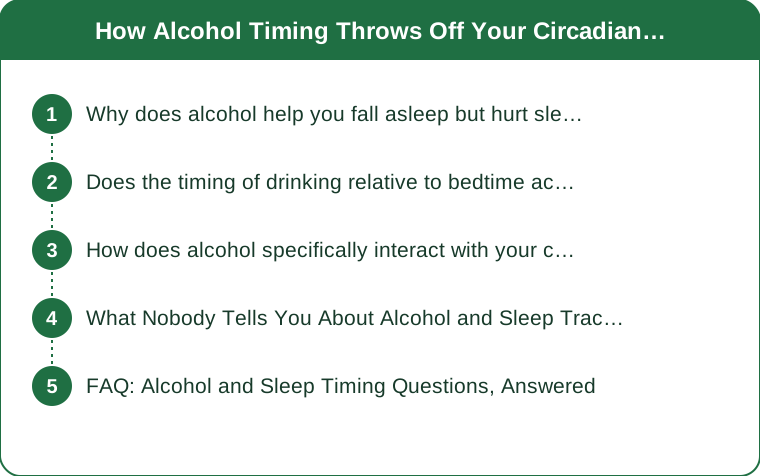
Why does alcohol help you fall asleep but hurt sleep quality overall?
Alcohol has a sedative effect early on, which speeds up sleep onset, but as your body metabolizes it over the following hours, it disrupts the deeper, restorative sleep stages and interferes with your circadian system’s normal overnight temperature and hormone regulation — this is why people often wake up in the middle of the night after drinking, even if falling asleep was easy.
Does the timing of drinking relative to bedtime actually change the effect?
Yes, significantly. Alcohol consumed 3+ hours before bed is largely metabolized before your body needs to enter its deeper circadian-regulated sleep stages, minimizing disruption. Alcohol consumed within an hour of bedtime hits its disruptive window right as your body is trying to transition into those deeper stages, causing more noticeable fragmentation.

How does alcohol specifically interact with your circadian clock, beyond just sleep stages?
Alcohol can suppress melatonin production and shift core body temperature patterns, both of which are central to circadian timing — this is part of why frequent evening drinking is associated with more circadian misalignment symptoms (like feeling “off” or jet-lagged even without travel) over time, separate from the sleep-quality effects.
What Nobody Tells You About Alcohol and Sleep Tracking
Here’s something sleep-tracker users often notice but rarely get explained: your sleep-tracking app’s “deep sleep” percentage often looks notably lower on nights after drinking, even nights where you felt like you slept plenty of hours. This tracks with the actual physiology — alcohol shifts sleep architecture toward lighter stages later in the night, which trackers pick up even when total time asleep looks normal.
FAQ: Alcohol and Sleep Timing Questions, Answered
How much alcohol does it take to cause noticeable circadian disruption?
Effects vary by individual, body weight, and tolerance, but even moderate amounts (1-2 drinks) close to bedtime have been shown to measurably reduce REM sleep in research, while smaller amounts earlier in the evening tend to have less impact.
Does the type of alcohol (wine vs. beer vs. spirits) matter for circadian effects?
The primary factor is the amount of alcohol (ethanol) consumed and its timing relative to bedtime, more so than the specific beverage type, though congeners in some drinks (like red wine or dark spirits) may contribute to next-day grogginess separately from sleep-stage disruption.
If you’re going to drink, what timing minimizes the circadian impact?
Finishing drinks at least 3-4 hours before bedtime, and staying well-hydrated, gives your body more time to metabolize the alcohol before it would otherwise interfere with your deeper, circadian-regulated sleep stages. This is general information, not medical advice.
TL;DR:
- Alcohol speeds up falling asleep but disrupts sleep quality later in the night
- Drinking within an hour of bedtime causes more disruption than drinking 3+ hours before
- Alcohol suppresses melatonin and shifts body temperature patterns central to circadian timing
- Sleep trackers often show reduced deep sleep on nights after drinking, even with normal total hours
If a nightcap is part of your routine, moving it earlier in the evening is the simplest way to protect both your sleep quality and your circadian rhythm.
Keep Reading
This article is for general informational purposes only and is not medical advice. Always consult a qualified health professional for guidance specific to you.