Your Body Clock Is Real: The Circadian Habits That Fix Energy, Sleep and Mood
Inside you runs a 24-hour operating system — a master clock in your brain conducting hormone releases, body temperature, digestion, alertness and repair on a precise daily schedule. Modern life treats it like a suggestion: bright screens at midnight, dim offices at noon, meals at random. The result is a quiet mistiming that shows up as 3pm crashes, wired-tired nights and moody mornings. Circadian health is the missing layer under sleep, energy and mood — and its levers are almost all free.

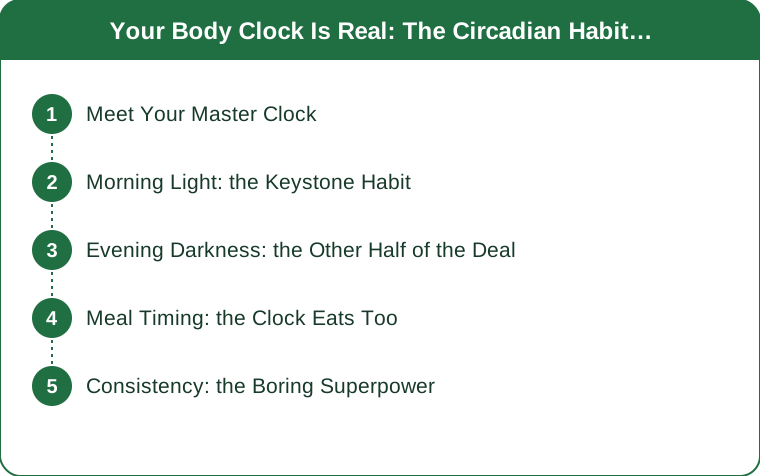
Meet Your Master Clock
The suprachiasmatic nucleus — a few thousand neurons behind your eyes — synchronizes trillions of cellular clocks using one primary signal: light. Morning brightness tells it day has begun, cueing cortisol’s healthy wake-up pulse and starting a countdown that releases melatonin roughly 14–16 hours later. Every organ runs on this schedule: digestion peaks midday, body temperature dips pre-dawn, muscle repair runs overnight. When your light and behavior match the clock, everything hums. When they contradict it — bright nights, dark mornings — you get the biological equivalent of an orchestra with two conductors.
Morning Light: the Keystone Habit
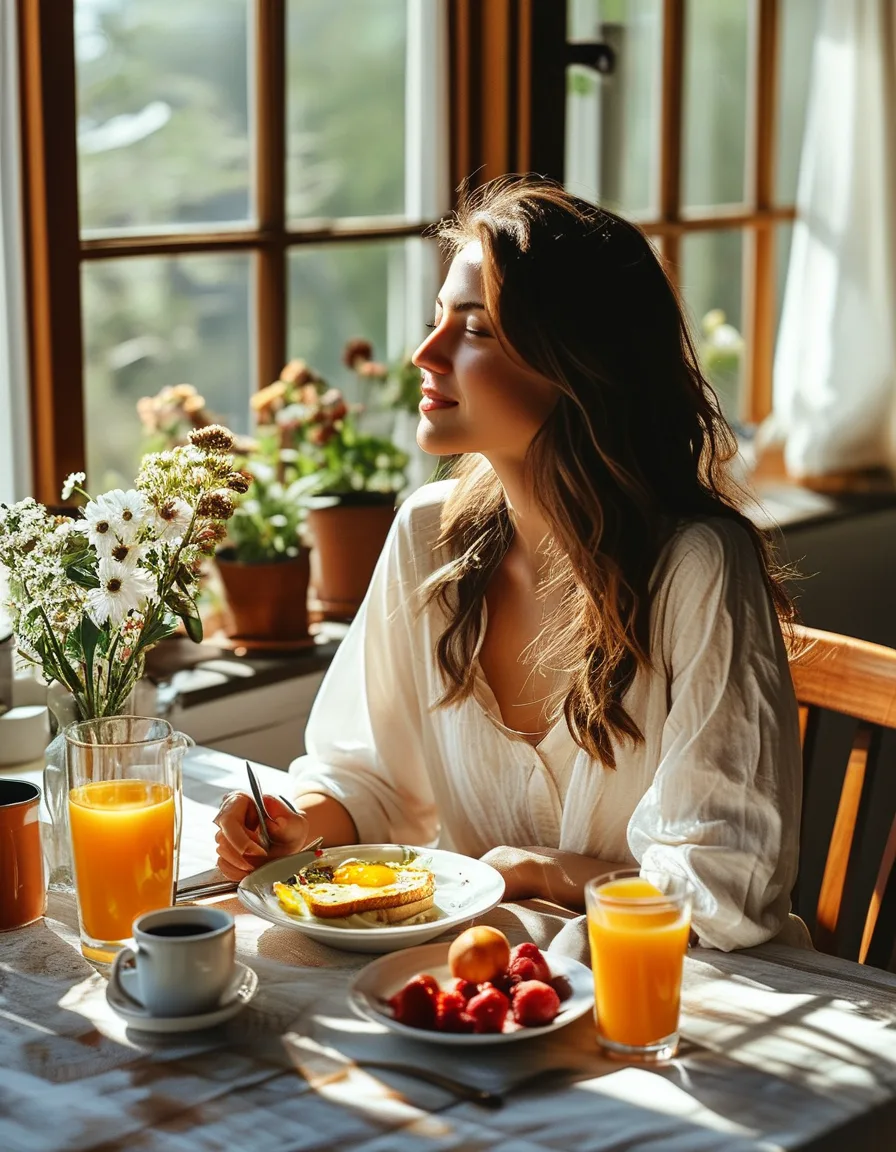
If circadian science has one headline instruction: get bright light within an hour of waking — ideally outdoors, because even an overcast sky delivers many times the light of any indoor room, and window glass filters much of the signal. Ten to twenty minutes anchors the clock: cortisol pulses properly, alertness arrives without a fight, and tonight’s melatonin gets scheduled on time — which is why morning-light people report better sleep as often as better mornings. Coffee on the balcony, the walk to the train, breakfast by an open door: the delivery method is irrelevant. The photons are the medicine.
Evening Darkness: the Other Half of the Deal
The clock needs contrast, and modern evenings erase it: overhead lighting at 10pm reads as afternoon, delaying melatonin by hours. The countermeasures are atmospheric: dim to lamps after sunset (warm, low, lower than feels normal at first), screens distanced and dimmed in the final hour — though the doom-scroll’s content stimulates more than its blue light does — and the bedroom genuinely dark. The poetic version is accurate: your ancestors got firelight after sunset, and their clocks never needed an article like this. Dim evenings are not a wellness aesthetic. They are the signal’s other half.
Meal Timing: the Clock Eats Too
Digestion runs on circadian rails — insulin sensitivity peaks earlier in the day and fades by night, which is why the identical meal lands metabolically better at 1pm than 10pm. The practical translations: front-load calories where feasible (the breakfast-like-a-queen adage has clock science behind it), keep a consistent meal rhythm (erratic eating is jet lag for your gut’s clocks), and close the kitchen two to three hours before bed — late heavy meals fragment sleep and force night-shift digestion. No new diet required: same food, better scheduled, measurably different results.
Consistency: the Boring Superpower
The clock’s deepest preference is rhythm: waking, eating, moving and sleeping at similar times daily — including the weekend, where the fun goes to die but the energy gets made. Social jet lag (weekday 6am, weekend 10am) drags your Monday through an uncrossed time zone, which is why it feels exactly like jet lag. Keep weekend wake times within an hour of weekdays, put movement in daylight hours when possible, and let the schedule get boring. In circadian terms, boring is the most restorative thing a calendar can be — and steady energy is what boredom pays.
Circadian living in four moves: bright mornings outside, dim evenings on purpose, meals on a rhythm that favors daylight, and a schedule consistent enough to bore a teenager. No purchases, no protocols — just finally sending your master clock signals that agree with each other. Start tomorrow within an hour of waking: ten minutes of sky. The 3pm version of you, three days from now, will send her regards.
Keep Reading
This article is for general informational purposes only and is not medical advice. Always consult a qualified health professional for guidance specific to you.