The Morning Light Protocol: Ten Minutes That Set Your Whole Day's Clock
Of every circadian intervention — the supplements, the apps, the sleep hygiene lists — one dominates the evidence and costs nothing: morning light. Ten-ish minutes of outdoor brightness within an hour of waking sets the clock that everything else runs on. The protocol, specifics included.

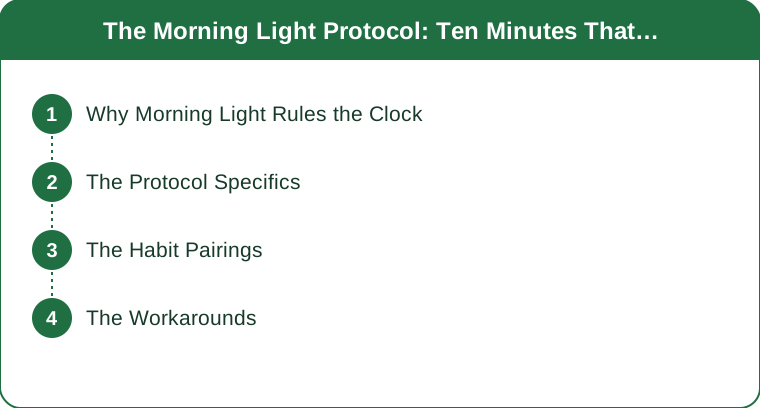
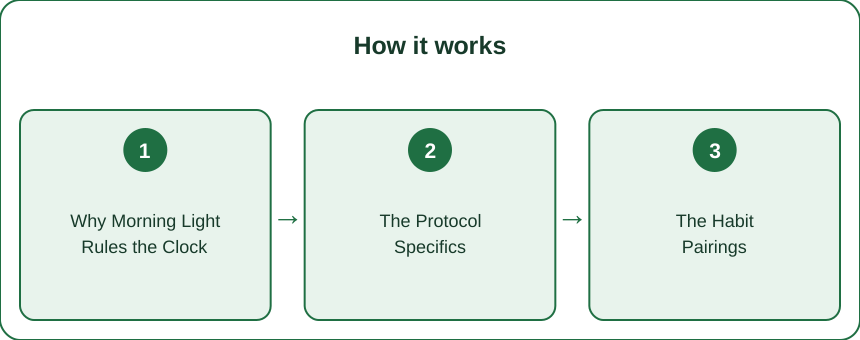
Why Morning Light Rules the Clock
The mechanism: specialized eye cells report brightness directly to the brain’s master clock (light is the clock’s primary setter — stronger than meals, exercise or willpower), the morning timing leverage (light early in the day advances the clock — earlier natural sleepiness tonight, easier waking tomorrow; the same light at night does the opposite, which is the evening-screen problem in one sentence), and the cascade effects (the morning anchor sets the cortisol rhythm’s healthy peak, the daytime alertness curve and the evening melatonin release — one habit, upstream of everything the sleep-hygiene lists chase downstream).
The Protocol Specifics
The how-much math: outside, within an hour of waking (the earlier the better — the anchor works best near wake time), ten minutes on a bright day, twenty-to-thirty on overcast (clouds dim more than eyes perceive — the overcast sky still delivers many times indoor light, it just needs longer), no sunglasses for the anchor minutes (the eyes need the brightness — sunglasses after; and never staring at the sun, obviously: ambient outdoor light is the entire requirement), and the through-a-window honesty (glass cuts the dose dramatically — the windowsill coffee is better than nothing and far worse than the balcony; outside is the protocol).

The Habit Pairings
Making it automatic: the coffee-outside conversion (the morning drink you already have, relocated — the zero-new-time version most people sustain), the walk stack (the morning ten-minute walk is the protocol plus the step count plus the exercise-snack — the triple-pay habit), the commute audit (the walk-to-transit portion may already qualify — deliberately unshaded and unhurried, it counts), and the pet-and-kid economy (the dog walk and the school run were protocols all along — doing them phone-free upgrades the light dose with an attention bonus).
The Workarounds
The hard cases: the dark-winter problem (northern winters can’t deliver — the 10,000-lux light box used morning-side is the evidence-backed substitute; twenty-to-thirty minutes at breakfast distance), the pre-dawn riser (the shift worker and the 5am gym-goer anchor with bright artificial light at wake and catch real sky when it arrives), the consistency-over-perfection rule (five mornings a week moves the clock — the missed rainy Tuesday doesn’t undo the system), and the evening bookend note (the morning anchor works best with its partner — dim evenings; the digital-sunset crowd and the morning-light crowd are running one protocol from both ends). Ten minutes, outside, most mornings: the cheapest prescription in circadian science.
Outside within the hour, ten sunny or thirty cloudy, no sunglasses, coffee relocates. Morning light is the clock’s master switch — flip it daily and the whole day runs on schedule.
Keep Reading
This article is for general informational purposes only and is not medical advice. Always consult a qualified health professional for guidance specific to you.