Why the 3PM Slump Hits Even When You Slept Great the Night Before
Quick Answer: The 3pm slump is a built-in circadian dip — a natural drop in core body temperature and alertness that happens roughly 7-9 hours after waking, regardless of sleep quality. It’s biological, not a sign you slept badly, and it responds better to light and movement than to more caffeine.
You did everything right last night — 8 hours, no scrolling in bed, up on time. And you’re still hitting a wall at 3pm. That’s not a sleep debt problem. It’s a scheduled dip your body runs every single day.

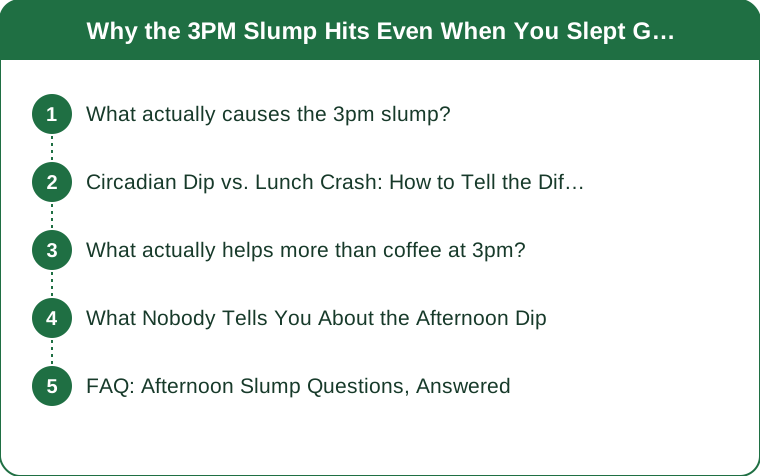
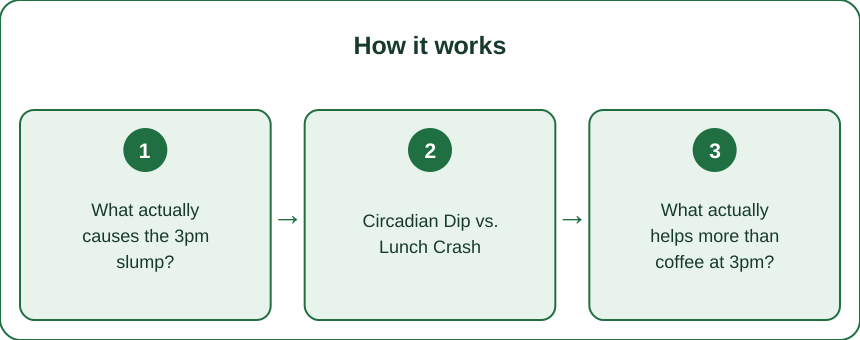
What actually causes the 3pm slump?
Your circadian rhythm isn’t just about nighttime sleep — it includes a built-in mid-afternoon dip in core body temperature and alertness, typically 7-9 hours after you wake up. This dip happens whether you slept 5 hours or 9. It’s a biological rhythm, not a verdict on last night.
Circadian Dip vs. Lunch Crash: How to Tell the Difference
A lunch crash hits within an hour of eating, feels heavy and food-related, and eases within 30-60 minutes. A circadian dip happens on a schedule regardless of when or what you ate, and feels more like foggy alertness than post-meal heaviness. Most people experience some overlap of both around the same window, which is why it feels worse than either alone.

What actually helps more than coffee at 3pm?
Bright light exposure (step outside for 5-10 minutes) and light movement (a short walk) both counter the dip’s alertness effect more reliably than a second afternoon coffee, which mostly just borrows against tonight’s sleep. A 10-15 minute walk in daylight is one of the best-studied non-caffeine fixes for this specific window.
What Nobody Tells You About the Afternoon Dip
Here’s the part that surprises people: fighting the dip with more stimulation often backfires. A second coffee after 2pm can measurably delay tonight’s sleep onset, deepening tomorrow’s dip in a slow-building cycle. The dip is designed to pass in 20-30 minutes on its own — working with it (light, brief movement, even a 10-minute walk) resolves it faster than trying to override it.
FAQ: Afternoon Slump Questions, Answered
Is the 3pm slump the same for everyone?
Timing shifts slightly by chronotype — early risers may dip closer to 2pm, night owls closer to 4-5pm — but nearly everyone experiences some version of it daily.
Does a short nap help the circadian dip?
A 10-20 minute nap before 3pm can help without disrupting nighttime sleep; naps after 4pm or longer than 30 minutes more often make it worse.
Will the slump go away if I fix my sleep schedule?
It lightens with consistent sleep timing but the dip itself is a normal circadian feature, not a fixable defect — the goal is working with it, not eliminating it.
TL;DR:
- The 3pm dip is a normal circadian feature tied to your wake time, not a sleep failure
- It’s distinct from (but often overlaps with) a post-lunch food crash
- Light exposure and a short walk beat more caffeine for this specific window
- A late coffee to fight it can delay tonight’s sleep and worsen tomorrow’s dip
You’re not doing sleep wrong — your body just runs this dip on a schedule, every single day, for everyone.
Keep Reading
This article is for general informational purposes only and is not medical advice. Always consult a qualified health professional for guidance specific to you.