Why Your Body Clock Drifts Later Just as the Days Get Shorter
Quick Answer: Your body clock runs slightly longer than 24 hours and needs a daily reset, which comes almost entirely from morning light. As sunrise gets later in autumn, most people wake before it and lose that reset - while evening screens and bright indoor light keep pushing the clock later. Less total daylight but worse morning light equals a later clock, not an earlier one. The fix is 10-30 minutes of outdoor light within an hour of waking.
Every autumn the same complaint appears: it is dark earlier, so why is falling asleep harder? The answer is that your clock is not counting daylight hours. It is watching for a specific signal at a specific time, and that signal is going missing.

Why does less daylight push my clock later instead of earlier?
Because the reset signal is timing-dependent, and it is the morning half that is disappearing.
Your internal clock runs on an intrinsic period averaging slightly over 24 hours - close to 24.2 for most people. Left with no cues, you would drift later every single day. The correction comes from light hitting specialized cells in your retina that report to the master clock, and crucially, the same light has opposite effects depending on when it arrives.
Light in the morning, shortly after your natural wake time, shifts the clock earlier. Light in the evening shifts it later. This is the phase response curve, and it is the whole story.
Here is what autumn does to it. Sunrise retreats through September and October, so an increasing share of people wake in darkness or near-darkness and get their first real light exposure indoors - where illumination runs perhaps 100-500 lux, against 10,000+ lux outdoors even on an overcast morning. The advance signal weakens dramatically.
Meanwhile evening light barely changes, because it is artificial. Screens, overhead lights, and bright kitchens deliver a delay signal at full strength every night regardless of season. Weak advance signal plus unchanged delay signal equals a clock drifting later - which shows up as trouble falling asleep, harder mornings, and a gap between when you go to bed and when you actually sleep.
How much morning light do I actually need?
Less than people expect, but it has to be outdoor light and it has to be early.
Duration: 10-20 minutes on a clear morning, 20-30 minutes if it is overcast. Longer is better up to a point, but the returns flatten - the first ten minutes do most of the work.
Timing: within one hour of waking is the target. The advance effect is strongest shortly after your body’s subjective morning begins, and it weakens as the morning progresses.
Intensity is why outdoors matters. A bright indoor room is around 300-500 lux. An overcast day outdoors is 1,000-10,000 lux. Direct sun is 50,000-100,000 lux. The gap between indoors and outdoors on a grey morning is larger than the gap between a grey morning and a sunny one, which is why the it-was-cloudy objection does not hold.
Through a window does not work well. Glass cuts intensity substantially, and you also lose the wide field of view that matters for the cells involved. Sitting by a bright window is better than nothing and much worse than stepping outside.
Sunglasses defeat it. Wear them if you need them for comfort or safety, but understand you are reducing the signal. Never look directly at the sun - you do not need to, since the intensity comes from the whole sky.
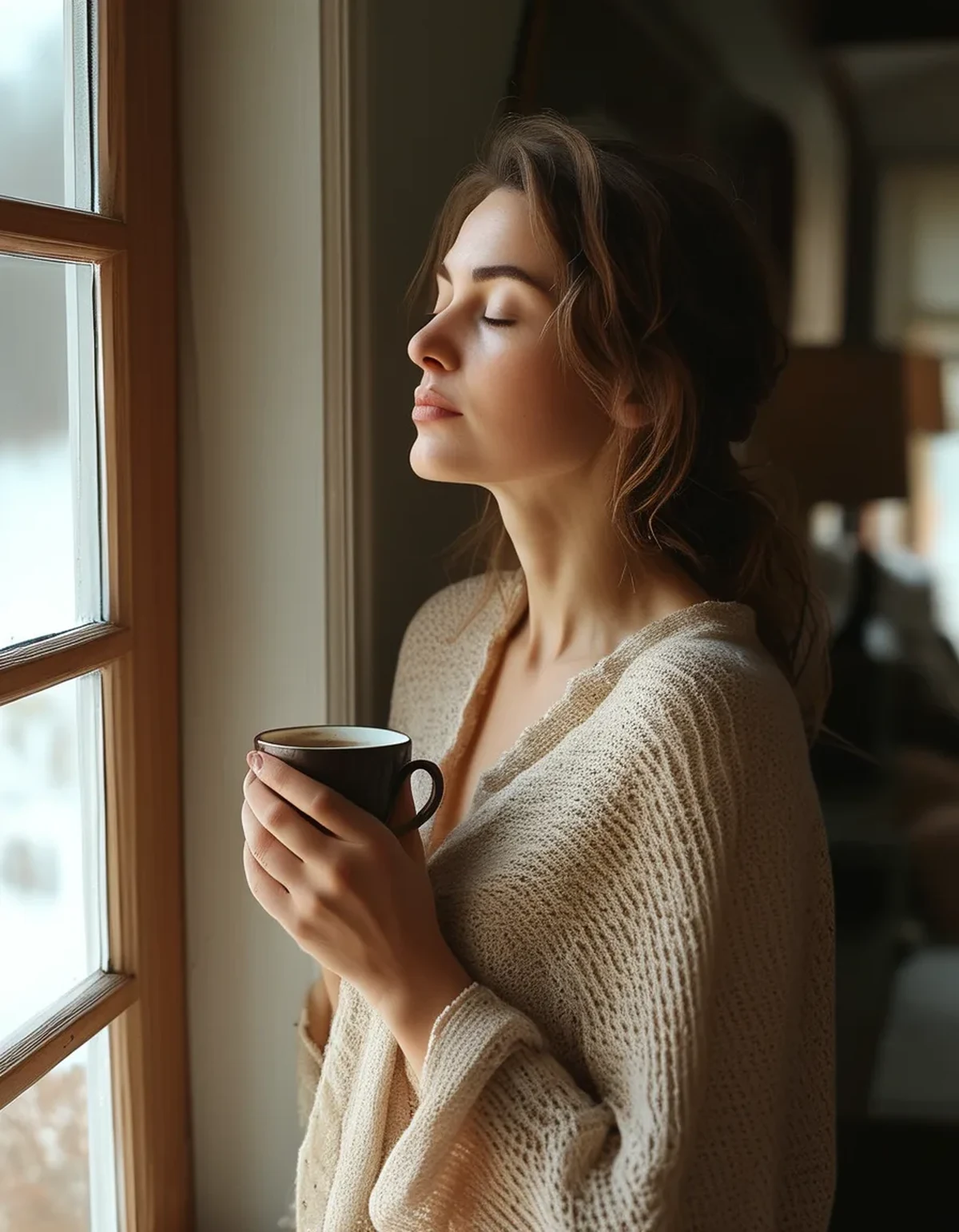
Practically: take your coffee outside, walk to the end of the street, or handle a short errand on foot. It does not need to be a project.
5 Mistakes That Push Your Clock Later Every Autumn
1. Getting your first light from a screen. A phone at arm’s length delivers a modest amount of light in a narrow field - enough to contribute to alertness, nowhere near enough to reset the clock, and it starts the day in a way that crowds out actual light exposure.
2. Sleeping in on weekends. A two-hour weekend shift is functionally jet lag every Sunday night. It moves your light exposure two hours later on the days you have the most freedom to get it right, and Monday morning pays for it. Hold your wake time within about an hour, seven days a week.
3. Keeping the house bright all evening. Household lighting is more than sufficient to deliver a delay signal. Dimming overhead lights and switching to lamps for the last two hours before bed is a bigger lever than most people assume, and it costs nothing.
4. Treating darkness as a cue to go to bed early. Sunset moves earlier fast, but your clock has not moved with it. Going to bed an hour earlier because it is dark outside often produces an hour of lying awake, which teaches your brain to associate bed with wakefulness. Go to bed when you are sleepy, and fix the timing at the morning end.
5. Waiting for the clock change to sort itself out. The autumn clock change shifts the labels, not your physiology, and it makes the morning-light situation temporarily better and the evening one worse. Building a morning light habit now means the transition costs you far less.
What should I actually change over the next month?
Four adjustments, in order of how much they matter.
Anchor your wake time first. A consistent wake time is the foundation everything else sits on, because it determines when your light exposure happens. Pick a time you can hold on a Sunday, not just a Tuesday.
Add outdoor light within the first hour. Ten to thirty minutes. Attach it to something you already do - the first coffee, the dog, the walk to the car by a longer route. If your schedule genuinely makes this impossible, a 10,000 lux light therapy lamp used for 20-30 minutes in the morning is the established alternative, and it is worth discussing with a clinician if you have any eye condition or bipolar diagnosis. This is general information, not medical advice.
Dim the last two hours. Lamps instead of overheads, screens dimmed or on warm settings, and ideally the brightest room in the house switched off. You are trying to make your evening dimmer than your morning by a wide margin - the contrast between them is what the clock reads.
Give the shift a few weeks. Circadian adjustment is not instant. Most people notice easier mornings within one to two weeks of consistent morning light, and a genuinely earlier sleep onset takes a little longer. The temptation is to conclude it is not working after four days. It usually is.
FAQ: Autumn Body Clock Questions, Answered
Does a light therapy lamp really substitute for going outside?
For circadian timing, a proper 10,000 lux lamp used at the right time works well and is well supported - it was developed precisely for people who cannot get morning sun. It does not replicate everything about outdoor light, and outdoors also gives you movement and a wider field of view. Use the lamp when the season or your schedule makes outdoors impractical, and go outside when you can.
Why do I feel sleepy at 8pm now and then wide awake at 11?
That late-evening second wind is common and it reflects a wake-maintenance zone - a period shortly before your natural sleep onset when the clock actively promotes alertness. The early-evening dip is often a combination of the post-lunch trough and reduced light. If you push through the 8pm dip in dim conditions rather than turning on every light, the 11pm alertness spike tends to be milder.
Is it worth shifting my schedule earlier to match the daylight?
Only if you can shift your light exposure along with it. Moving your alarm earlier without adding morning light just shortens your sleep and makes everything harder. If you want an earlier schedule, move the wake time by 15 minutes per week and get outside immediately after each new wake time - that combination works where willpower alone does not.
TL;DR:
- Your clock runs slightly over 24 hours and resets on morning light, which is exactly what autumn removes.
- Evening artificial light keeps delivering a full-strength delay signal, so the net effect is a later clock despite shorter days.
- Get 10-30 minutes outdoors within an hour of waking - overcast still delivers far more lux than any indoor room.
- Anchor wake time within an hour across all seven days, dim the last two hours, and give it one to two weeks.
The frustrating part of autumn sleep is that the obvious interpretation is exactly backwards - darker evenings feel like they should help and they are actively part of the problem. The lever is not at night. It is the fifteen minutes after you wake up, outside, before the day gets hold of you.
Keep Reading
This article is for general informational purposes only and is not medical advice. Always consult a qualified health professional for guidance specific to you.